Gout Attacks: What Causes Them, How to Stop Them, and What Medications Help
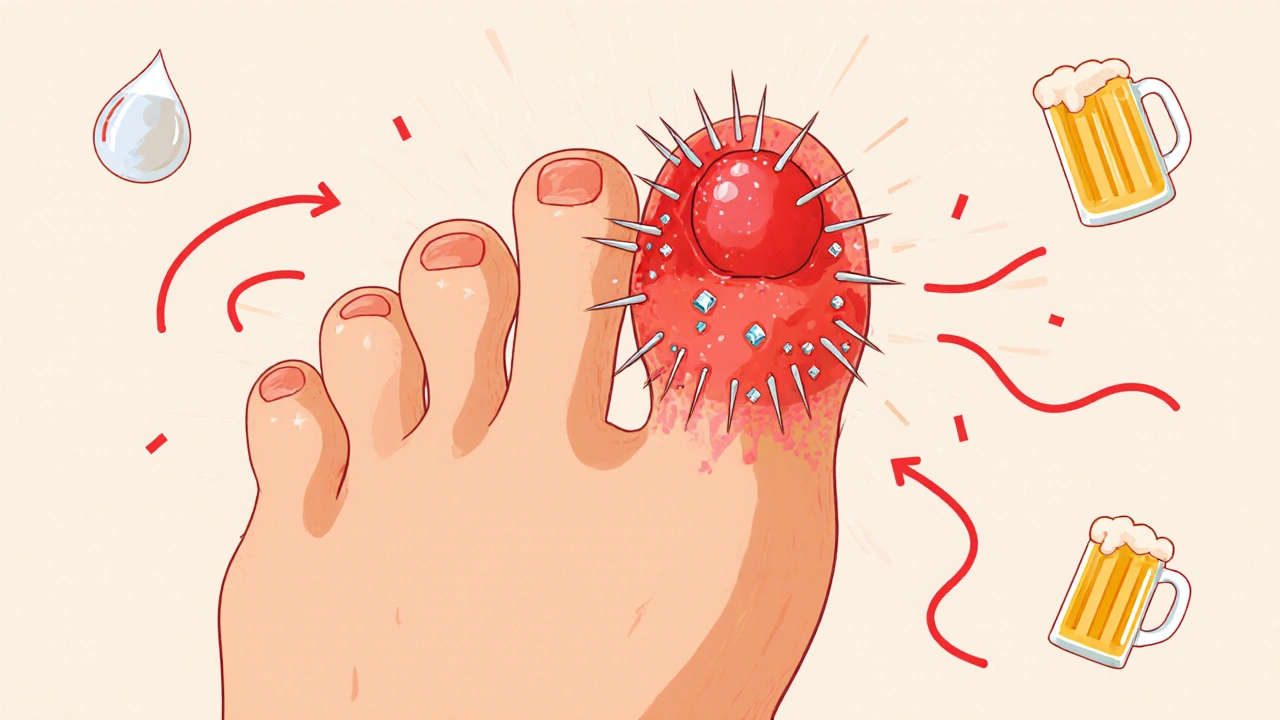
When you feel a gout attack, a sudden, severe inflammation in a joint caused by uric acid crystals. Also known as acute gouty arthritis, it doesn’t just hurt—it locks up your movement, makes walking impossible, and often hits at night without warning. This isn’t just "bad luck" or eating too much steak. It’s your body’s reaction to high levels of uric acid, a waste product that builds up when the body breaks down purines. When uric acid crystals form in your joints, especially the big toe, they trigger an immune response that swells, redness, and burning pain. You might think it’s just an old man’s problem, but gout attacks are rising fast in younger adults, especially those with obesity, high blood pressure, or type 2 diabetes.
What makes gout attacks so unpredictable? One day you’re fine, the next you can’t put weight on your foot. Triggers include alcohol—especially beer—red meat, shellfish, sugary drinks, and even dehydration. Some people get attacks after sudden changes in diet or starting a new medication like diuretics. And here’s the catch: even if your uric acid levels drop, crystals can stay in your joints for years, waiting to flare up again. That’s why treating the pain alone isn’t enough. You need a plan that stops future attacks, not just the current one.
Medications like colchicine, a drug that reduces inflammation caused by uric acid crystals are often the first line of defense during a flare. NSAIDs like ibuprofen help too, but they’re not safe for everyone—especially if you have kidney issues or stomach ulcers. For long-term control, drugs like allopurinol or febuxostat lower uric acid production, while probenecid helps your kidneys flush it out. But none of these work if you keep drinking beer or eating organ meats. Lifestyle changes aren’t optional—they’re the foundation.
What you’ll find in the posts below isn’t just a list of drugs. It’s real-world advice from people who’ve been there: how to time meds with meals, what supplements might help (and which ones to avoid), how kidney health connects to gout, and why some pain relievers can make things worse. You’ll see how gout overlaps with other conditions—like high blood pressure, kidney disease, and even opioid use—because your body doesn’t treat these problems in isolation. There’s no magic cure, but with the right mix of medication, diet, and timing, you can go from constant pain to long stretches without a flare. Let’s get you there.
Gout Attacks: Understanding Uric Acid, Triggers, and Effective Medication Strategies
Gout attacks are caused by uric acid crystals in joints, triggered by diet, dehydration, or medication changes. Learn how to manage flares and prevent them long-term with effective meds and lifestyle steps.