Mood Stabilizer Interactions: What You Need to Know Before Taking Them
When you’re taking a mood stabilizer, a class of medications used to control extreme mood swings, especially in bipolar disorder. Also known as psychotropic mood regulators, these drugs help prevent manic and depressive episodes—but they don’t play well with everything else in your medicine cabinet. Mixing them with other drugs, supplements, or even common over-the-counter painkillers can lead to serious side effects, toxicity, or reduced effectiveness. This isn’t theoretical. People end up in the ER because they took ibuprofen with lithium and didn’t realize it could spike their lithium levels to dangerous levels.
One of the most common mood stabilizers is lithium, a salt-based drug that requires careful blood monitoring to stay in the safe range. Also known as lithium carbonate, it’s effective but easily disrupted by things like diuretics, NSAIDs, and even low-sodium diets. Then there’s valproate, an anticonvulsant also used to stabilize moods. Also known as valproic acid, it can interact with aspirin, warfarin, and even some antibiotics, raising the risk of liver damage or bleeding. And if you’re on an antipsychotic, a drug often paired with mood stabilizers for severe bipolar symptoms. Also known as second-generation antipsychotics, like risperidone or quetiapine—you’re stacking risks. These combinations can cause dizziness, confusion, irregular heartbeat, or even seizures.
It’s not just prescription drugs. Herbal supplements like St. John’s Wort can make mood stabilizers less effective. Even caffeine and alcohol can throw off your balance. Some people think if it’s natural, it’s safe—but that’s not true. Your body doesn’t care if something comes from a pharmacy or a health food store. It reacts to the chemistry. And when you’re on a mood stabilizer, your system is already finely tuned. A small change can tip the scale.
Doctors don’t always bring this up. You might get a prescription for lithium and be told to take it with food, but never warned that a single bottle of ibuprofen could land you in the hospital. That’s why you need to know this yourself. Keep a list of everything you take—prescriptions, OTC meds, vitamins, even herbal teas. Bring it to every appointment. Ask: "Could this interact with my mood stabilizer?" Don’t assume your pharmacist caught it. Pharmacies are busy. You’re your own best advocate.
Below are real, practical guides that break down exactly how these interactions happen, which ones are most dangerous, and what to do if you’re already on multiple meds. You’ll find details on how lithium reacts with common pain relievers, why valproate can mess with your liver when mixed with certain antibiotics, and how antipsychotics can amplify side effects when stacked with other CNS depressants. No fluff. No theory. Just what you need to stay safe.
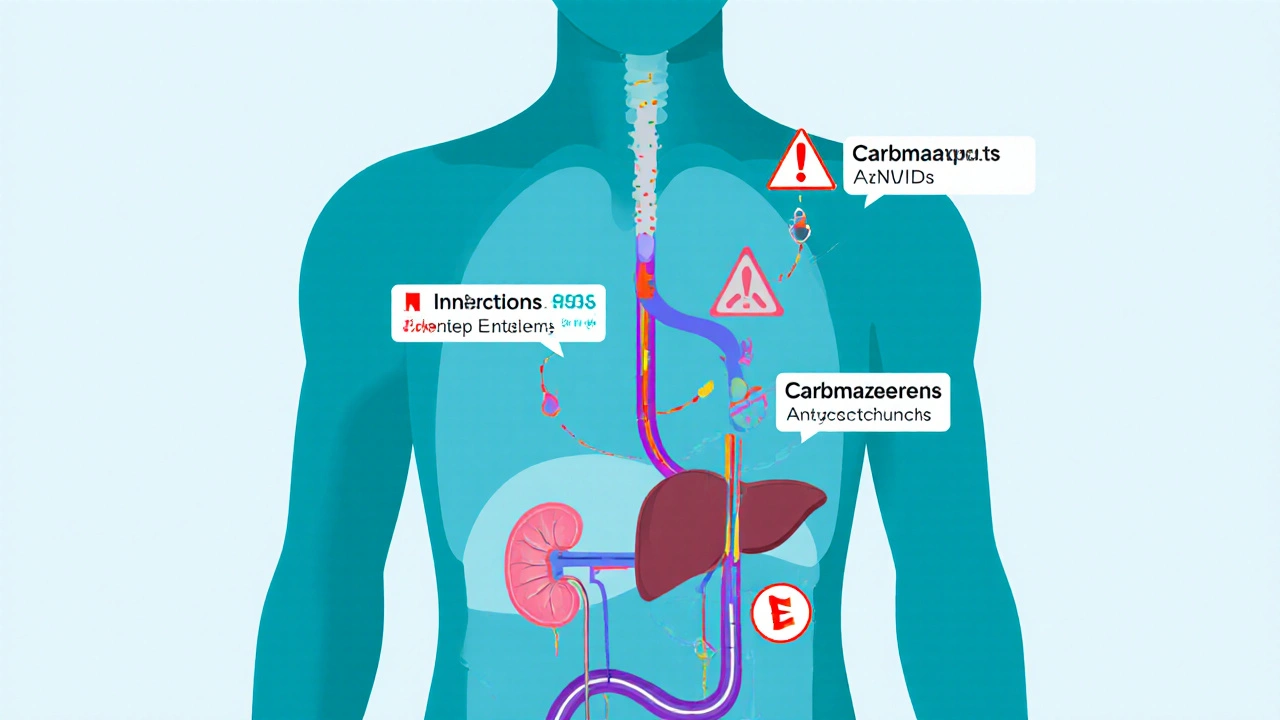
Mood Stabilizers: Lithium, Valproate, and Carbamazepine Interactions Explained
Lithium, valproate, and carbamazepine are powerful mood stabilizers with dangerous interactions. Learn how common drugs like ibuprofen or diuretics can trigger toxicity, why valproate boosts lamotrigine levels, and what to do if you're on one of these meds.