Lithium Toxicity: Signs, Risks, and What to Do If It Happens
When you're taking lithium, a mood-stabilizing drug commonly prescribed for bipolar disorder. Also known as lithium carbonate, it helps control extreme mood swings—but only if your blood levels stay in a narrow, safe range. Too little and it doesn’t work. Too much and it becomes dangerous. lithium toxicity, a serious condition caused by excess lithium in the bloodstream doesn’t happen overnight. It builds slowly, often because of simple mistakes: skipping a dose then doubling up, getting dehydrated, or starting a new medication that interferes with how your kidneys clear lithium.
Many people don’t realize that lithium blood levels, the key measurement doctors use to monitor safety need to be checked every few months, even if you feel fine. Normal levels are between 0.6 and 1.2 mmol/L. Anything above 1.5 is risky. Above 2.0? That’s a medical emergency. Early signs of trouble include shaky hands, frequent urination, nausea, and mild confusion. Later? Seizures, irregular heartbeat, or loss of coordination. These aren’t just side effects—they’re red flags that your body can’t handle the dose anymore.
It’s not just about the pill you take. lithium side effects, like increased thirst and frequent urination can trick you into drinking too much water—or not enough. Sweating in hot weather, vomiting from the flu, or taking NSAIDs like ibuprofen can all push lithium levels up. Even switching from brand-name to generic lithium can change how your body absorbs it. That’s why your doctor needs to know every medication, supplement, or change in your routine.
If you’ve been on lithium for years, you might think you know how it works. But toxicity can sneak up on anyone—even people who’ve taken it for decades without issue. The good news? It’s preventable. Regular blood tests, staying hydrated, avoiding NSAIDs, and never adjusting your dose on your own are the best defenses. If you notice new tremors, dizziness, or stomach upset that won’t go away, don’t wait. Call your doctor. Or go to the ER. Lithium toxicity doesn’t get better with time. It gets worse.
Below, you’ll find real, practical guides from people who’ve dealt with lithium’s risks firsthand—from understanding drug interactions to spotting early warning signs before it’s too late. These aren’t theory pieces. They’re survival tips from patients and clinicians who’ve seen what happens when things go wrong—and how to stop it before it starts.
Mood Stabilizers: Lithium, Valproate, and Carbamazepine Interactions Explained
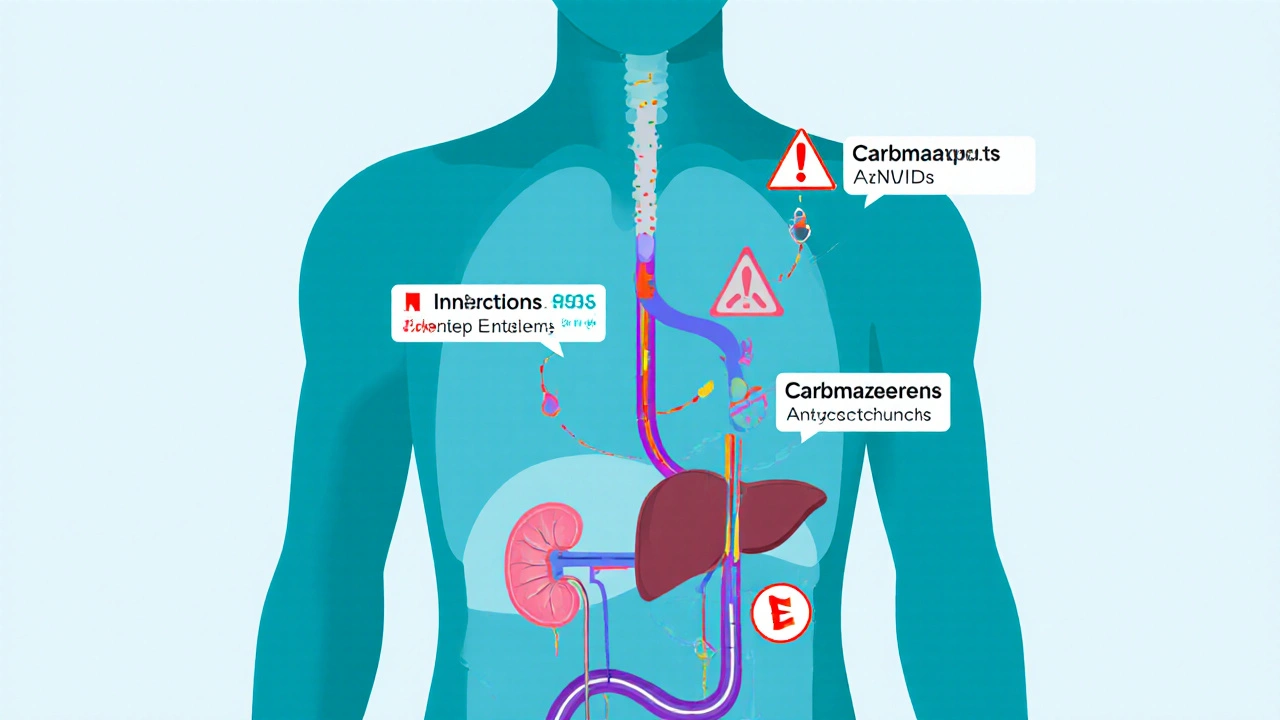
Lithium, valproate, and carbamazepine are powerful mood stabilizers with dangerous interactions. Learn how common drugs like ibuprofen or diuretics can trigger toxicity, why valproate boosts lamotrigine levels, and what to do if you're on one of these meds.