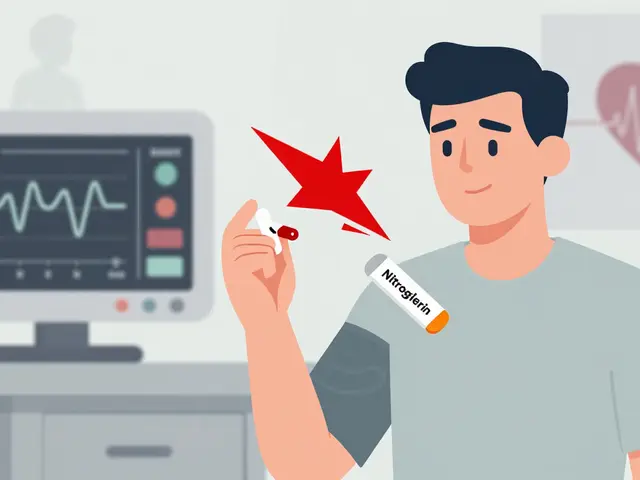
Bioequivalence: What It Means for Generic Drugs and Your Health
When you pick up a generic pill, you want to know it’ll do the same job as the brand-name version. That’s where bioequivalence, the scientific proof that two drug formulations release the same amount of active ingredient at the same rate in the body. Also known as therapeutic equivalence, it’s the invisible guarantee that your $5 generic isn’t a weaker copy—it’s a true replacement. This isn’t just a technical term for pharmacists. It’s what lets pharmacies, insurers, and you swap brand drugs for cheaper versions without risking your health.
Bioequivalence isn’t guessed at—it’s measured. The FDA requires generic manufacturers to prove their product matches the brand in how fast and how much of the drug enters your bloodstream. This is done through controlled studies in healthy volunteers, tracking blood levels over time. If the results fall within strict limits—usually 80% to 125% of the brand’s performance—the drug is approved as bioequivalent. You’ll find this approved status listed in the FDA Orange Book, the official government database that tracks which generic drugs are approved as therapeutically equivalent to brand-name drugs. That’s why the Orange Book is the go-to tool for pharmacists deciding what to dispense, and for insurers setting coverage rules. Without bioequivalence, the entire generic drug system would collapse.
But bioequivalence doesn’t just mean the drug works the same—it means it’s safe to switch. For example, if you’re on a blood thinner like warfarin or an epilepsy drug like lamotrigine, even small differences in absorption can cause serious problems. That’s why the FDA only approves bioequivalent generics for these high-risk medications after rigorous review. The same logic applies to insulin biosimilars and complex generics like inhalers or injectables. These aren’t simple copies—they’re engineered to match the original’s behavior in your body. And when a drug has a black box warning, the FDA’s strongest safety alert for life-threatening risks. bioequivalence becomes even more critical. You can’t afford a version that behaves differently.
What you’ll find below are real-world guides that show how bioequivalence affects your daily health choices. From how the FDA lists approved generics in the Orange Book, to why some drug shortages happen despite bioequivalence, to how fiber supplements can interfere with absorption—these posts cut through the noise. You’ll learn how to read drug interaction tables, understand why certain generics are preferred over others, and spot when a medication change might need extra caution. This isn’t theory. It’s the practical knowledge you need to make smarter, safer decisions about your prescriptions.

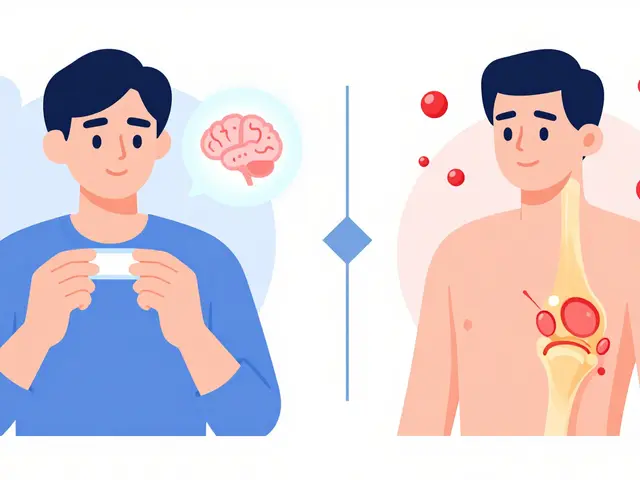
Managing Patient Perception and Nocebo Effects with Generic Medications: A Guide
Explore how the nocebo effect impacts patient perception of generic medications. Learn strategies for clinicians to manage expectations and ensure successful therapy outcomes.
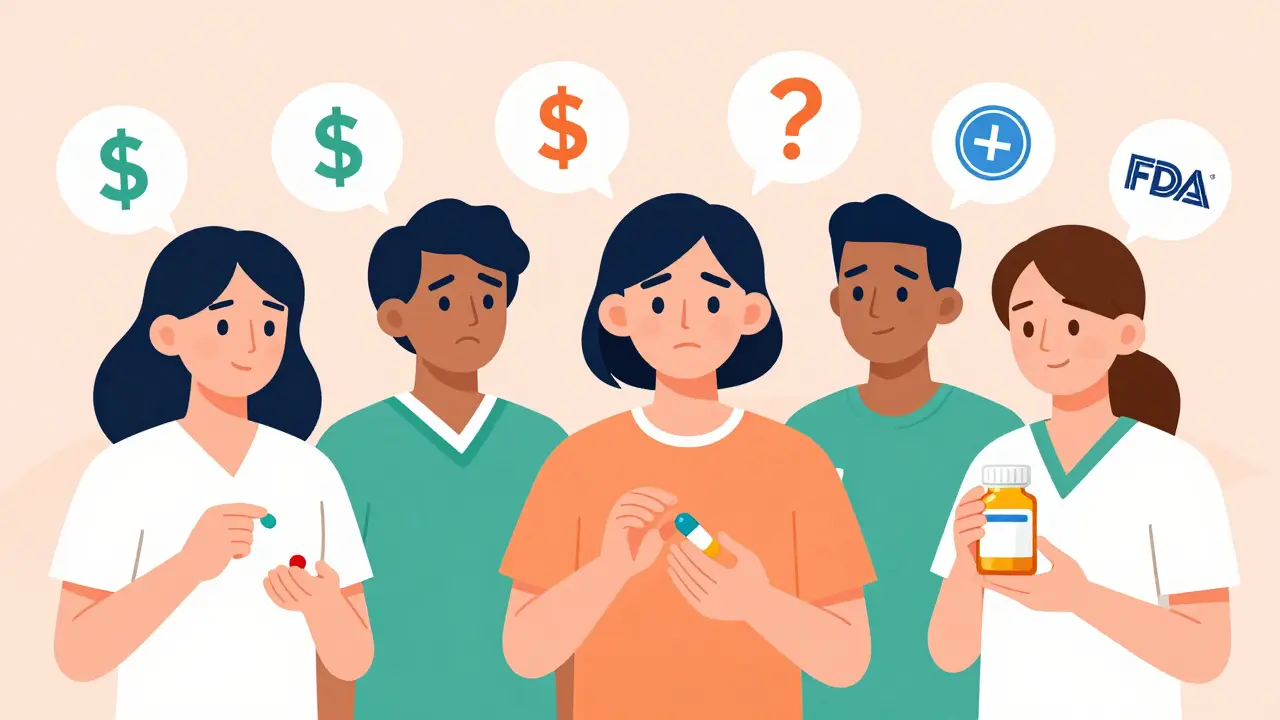
Risk Perception: How Patients Assess Generic Drug Safety
Many patients worry that generic drugs are less safe than brand-name versions, even though science proves they're identical. This article explores why these fears exist, who's most affected, and how better communication can improve trust and adherence.
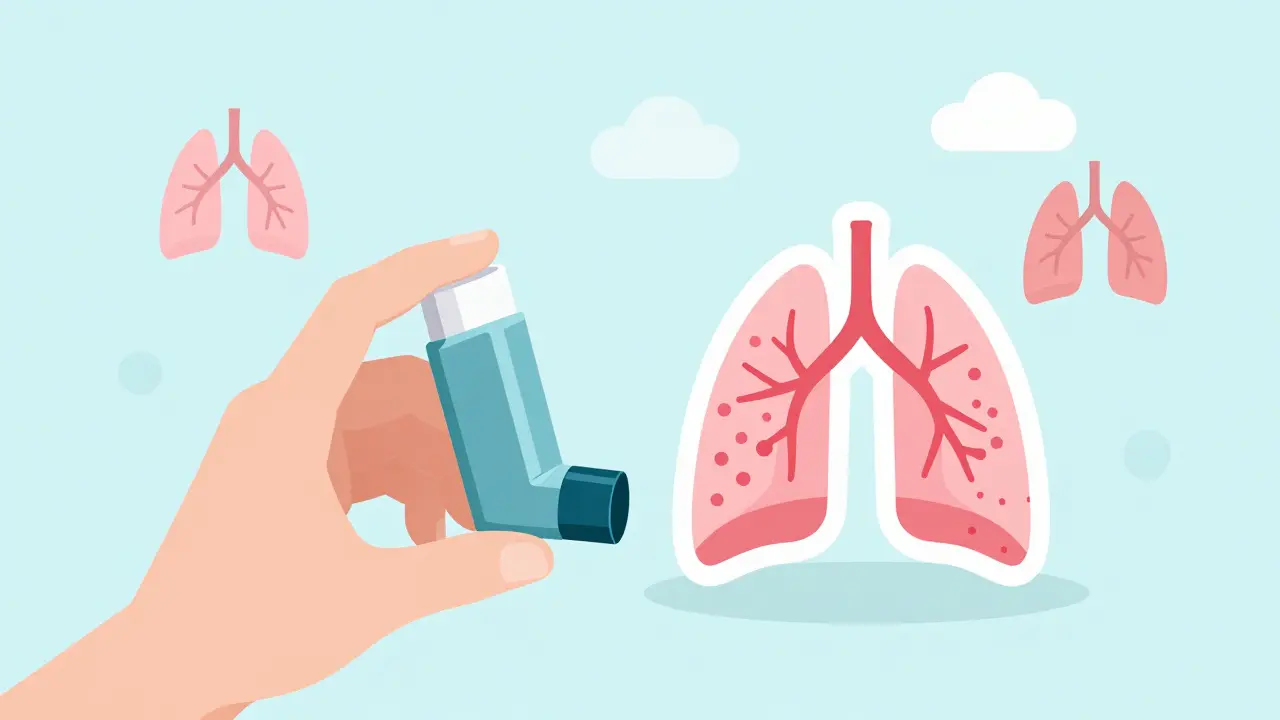
Complex Generic Formulations: Why Proving Bioequivalence Is So Hard
Proving bioequivalence for complex generics like inhalers, creams, and injectables is far harder than for simple pills. Learn why standard tests fail, how reverse-engineering works, and what’s being done to bring affordable versions to market.
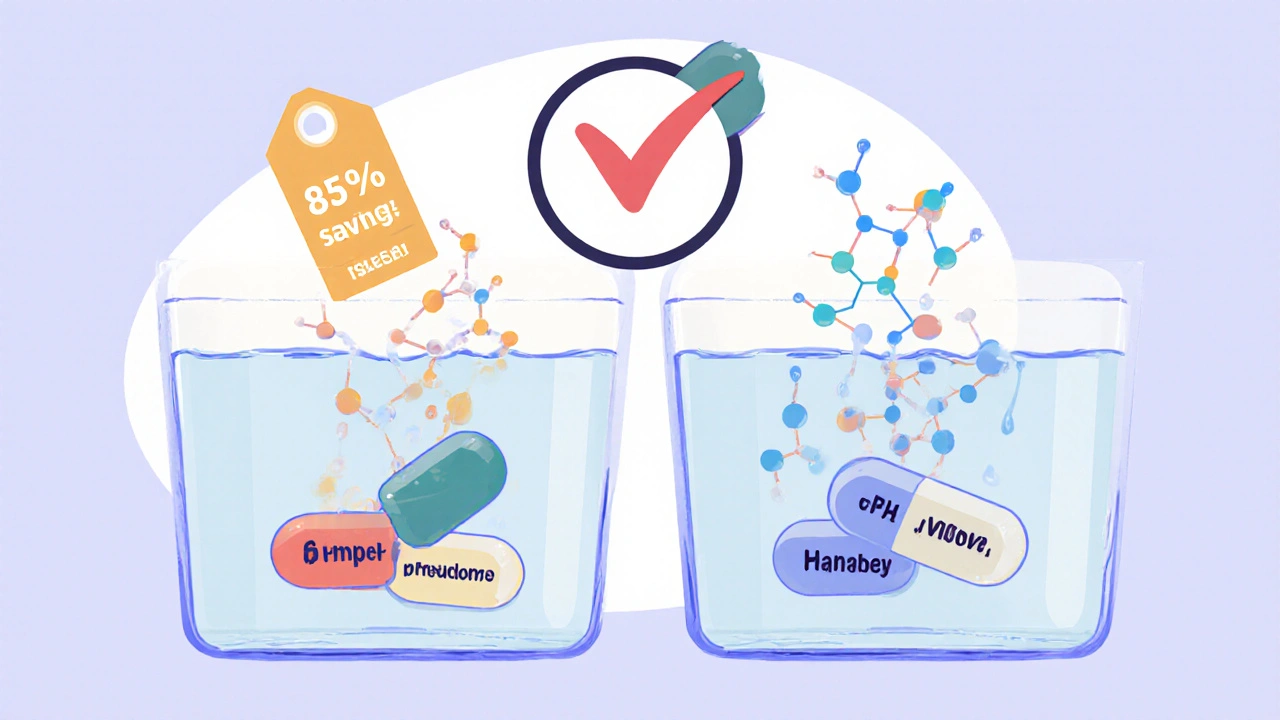
Generic vs. Brand Name Drugs: What You Need to Know About Bioequivalence and Cost Savings
Generic drugs are just as effective as brand-name versions, saving patients up to 85% on medication costs. Learn how bioequivalence testing ensures safety and when to watch for subtle differences.