Naltrexone: What It Is, How It Works, and What You Need to Know
When you hear naltrexone, a medication that blocks opioid receptors in the brain to reduce cravings and prevent drug effects. Also known as Revia or Vivitrol, it's not a cure for addiction—but it’s one of the few tools that actually stops opioids from working and lowers the urge to drink. Unlike methadone or buprenorphine, naltrexone doesn’t activate opioid receptors at all. Instead, it sits in the doorway and says, ‘Nope, not today.’ That’s why it’s used after someone has fully detoxed—because if you take it while opioids are still in your system, it can trigger sudden, severe withdrawal.
Naltrexone is closely tied to two other key areas: opioid constipation, a common and often unbearable side effect of long-term opioid use, and alcohol withdrawal, the dangerous process of stopping heavy drinking without medical help. For opioid constipation, a cousin of naltrexone called naloxegol or methylnaltrexone works in the gut without affecting pain relief. For alcohol, naltrexone helps reduce the pleasurable buzz you get from drinking, making it easier to stay stopped. It’s not magic, but it changes the rules of the game.
People often wonder if naltrexone is safe with other meds. The answer? Mostly yes—but not always. It can interact with opioid painkillers, making them useless, and it’s not for anyone still using heroin, oxycodone, or even codeine. If you’re on it and need surgery or emergency pain relief, you’ll need a non-opioid plan. It’s also not something you take casually. You need to be clear-headed about your goals. This isn’t a pill you pop to feel better—it’s a tool for rebuilding control.
What you’ll find below isn’t just a list of articles. It’s a collection of real-world guides that connect directly to naltrexone’s use cases: how it fits into addiction recovery, why it’s paired with behavioral therapy, how it compares to other meds like acamprosate, and what to do when side effects like nausea or sleep trouble show up. You’ll also see how it relates to broader topics like opioid constipation and the drugs designed to treat it, how it fits into the bigger picture of medication safety, and why timing matters when you’re switching from one treatment to another. These aren’t random posts—they’re the pieces you need to understand how naltrexone actually works in real life, not just in a textbook.
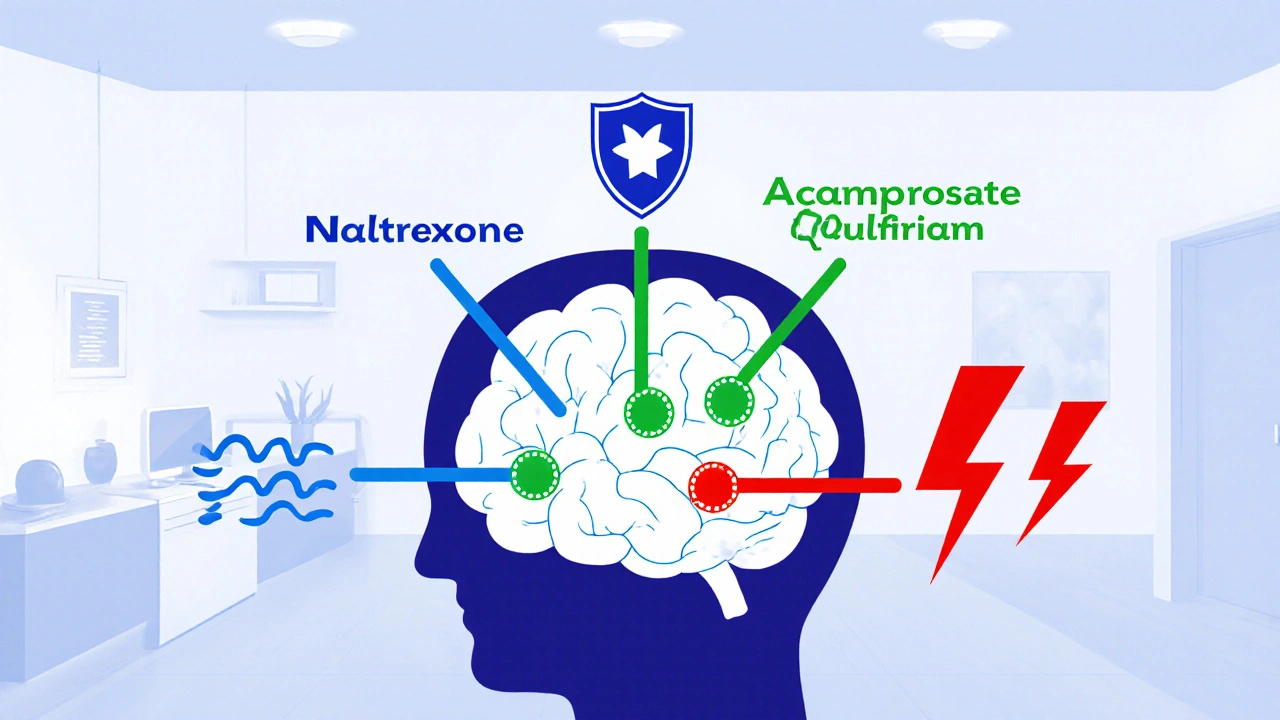
Medications for Alcohol Use Disorder: How They Reduce Relapse Risk - and When They Don’t
Naltrexone, acamprosate, and disulfiram can reduce relapse risk in Alcohol Use Disorder - but only if used correctly. Learn how they work, who they help, and why so few people get them.