Constipation from Opioids: Causes, Solutions, and What Works
When you take opioids for pain, constipation from opioids, a frequent and often overlooked side effect caused by how these drugs slow down the digestive tract. It’s not just uncomfortable—it can make you stop taking your pain medicine altogether. This isn’t normal bowel trouble. It’s a direct result of opioids binding to receptors in your gut, slowing muscle movement and drying out stool. Even low doses can trigger it, and it doesn’t get better with time like other side effects might. Many people think they just need to eat more fiber or drink more water, but that rarely fixes it. The real issue is how opioids act on your intestines, and that requires a targeted approach.
That’s where PAMORAs, a class of drugs designed to block opioid effects in the gut without touching pain relief in the brain. Also known as peripherally acting mu antagonists, they work right where the problem is—your digestive system—without interfering with how well your pain medication works. methylnaltrexone, a shot given under the skin, often used in patients who can’t take pills. naloxegol, an oral tablet taken daily, helps people who need ongoing relief without injections. And naldemedine, another daily pill, is built for long-term use in chronic pain patients. These aren’t laxatives. They don’t irritate or overstimulate. They undo the opioid effect locally, so your bowels can move normally again.
If you’re on long-term opioids and struggling with constipation, you’re not alone. It’s one of the most common reasons people stop their treatment. But you don’t have to suffer through it. There are proven options that work without reducing pain control. What you need isn’t more prune juice or fiber supplements—it’s the right kind of medical solution. Below, you’ll find detailed comparisons of these treatments, how they stack up, who benefits most, and what to watch out for. No fluff. Just clear, practical info to help you or someone you care about get back to normal.
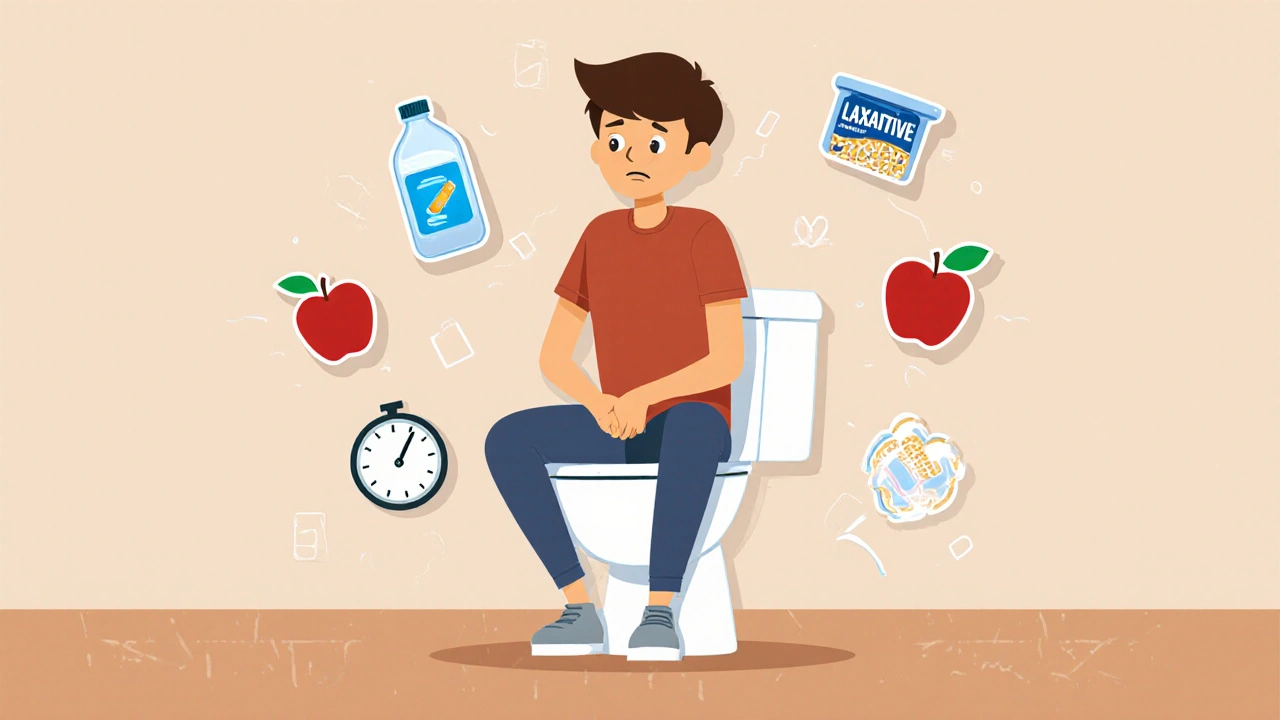
Common Opioid Side Effects: Constipation, Drowsiness, and Nausea Explained
Constipation, drowsiness, and nausea are the most common opioid side effects. Learn why they happen, how to manage them, and what to do if they don’t go away. Safe pain relief is possible with the right approach.